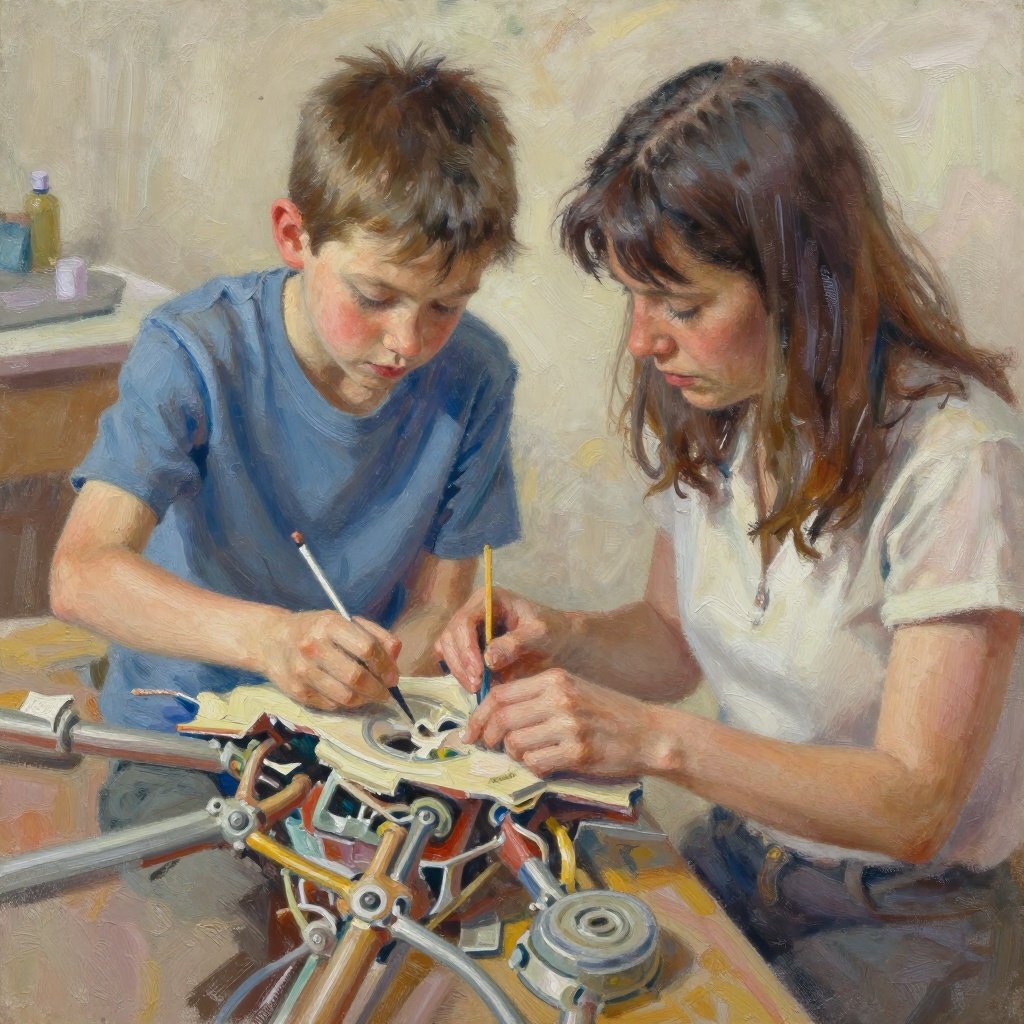
Learning OrganismsWhen software starts behaving aliveTimmy My program learns quickly, but the world changes faster. So why does it still collapse?Mrs. Parker Because entropy keeps erasing structure. Every noisy update spends energy, but learning must rebuild more order than it loses.Timmy So speed is not enough. It needs memory, repair, and a way to reject changes that make it worse.Mrs. Parker Exactly. Measure each change against past performance, keep useful patterns, and discard damage before it spreads.Narrator So the architecture becomes evolutionary: separate experiments, shared memory, and constant recovery instead of one fragile model.Timmy But how do we know it is learning, not merely changing?Mrs. Parker Test it on unfamiliar conditions. If it predicts better tomorrow, repairs its mistakes, and preserves what worked, the system has earned trust.Timmy So the solution is not faster software. It is software that learns faster than entropy destroys—and that is a new kind of artifact.Plot: A system that learns faster than entropy destroys is not just better software — it's a different category of artifact. It's closer to an organism than a machine. +Theme: Rendered in the style of expressive realism, characterized by detailed brushwork, vibrant yet subtle color palettes, and an emphasis on capturing the emotional essence. The use of light and shadow adds depth and texture, while the composition draws attention to intricate details and naturalistic representation. @Timmy: Resourceful 8yr old @Mrs. Parker: Unpredictable Examiner